
For more than a decade, I’ve watched marketplace commerce transform faster than any other segment of retail. What began as a new distribution channel has evolved into a complex, high-velocity ecosystem—one where every decision, from inventory allocation to ad strategy, now determines whether a brand thrives or falls behind.
Yet in this transformation, one thing has remained painfully unchanged: brands are still forced to operate as if their retail systems are separate.
Separate ad tools. Separate catalog systems. Separate inventory platforms. Separate analytics.
And in a world where Amazon, Walmart, TikTok Shop, and emerging marketplaces change by the week, those silos are a structural disadvantage.
Today, that changes. The AI retail intelligence revolution has arrived.
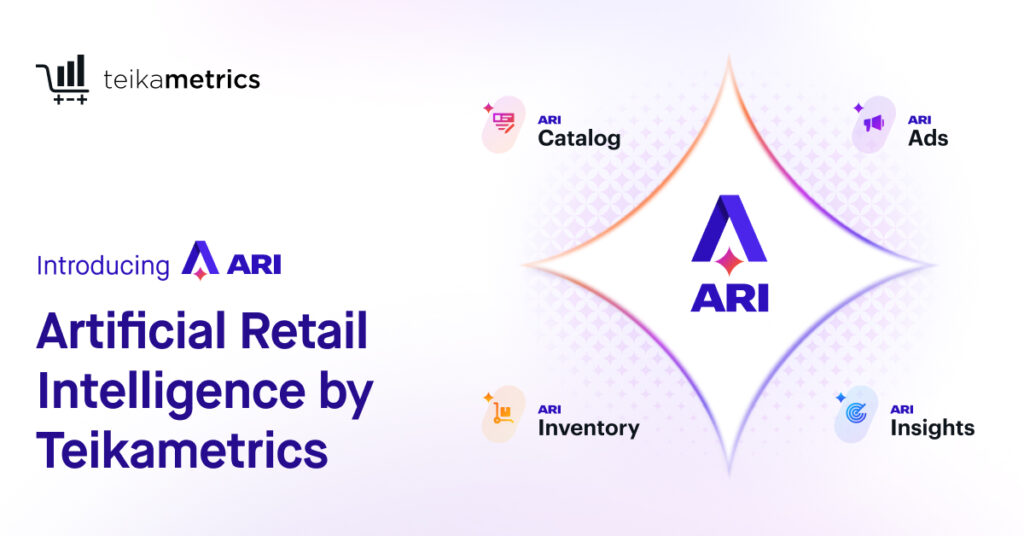
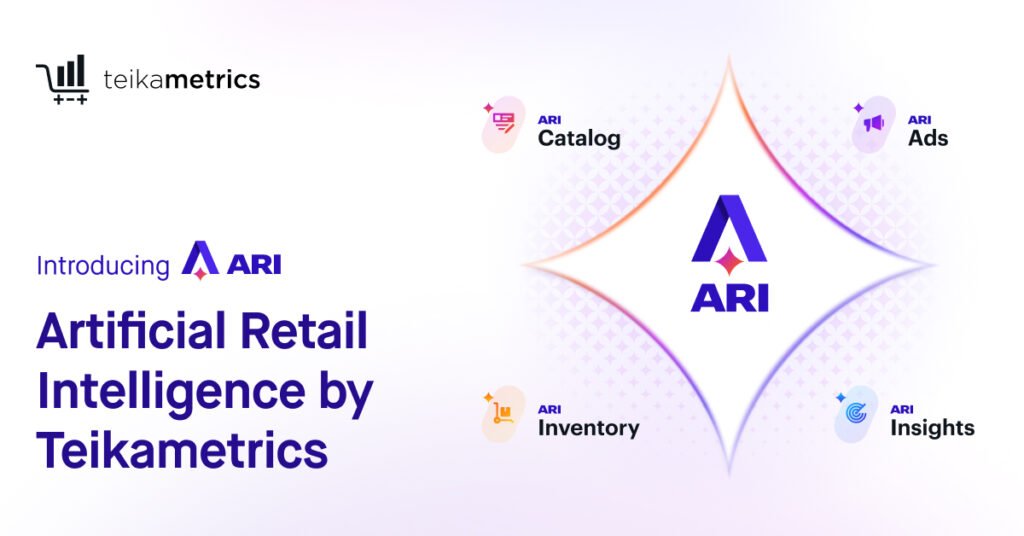
Introducing ARI: Artificial Retail Intelligence
Built to think like a retailer and scale like modern commerce, ARI represents the culmination of years of learning from thousands of brands, trillions of data points, and the ever-growing complexity of multi-channel retail.
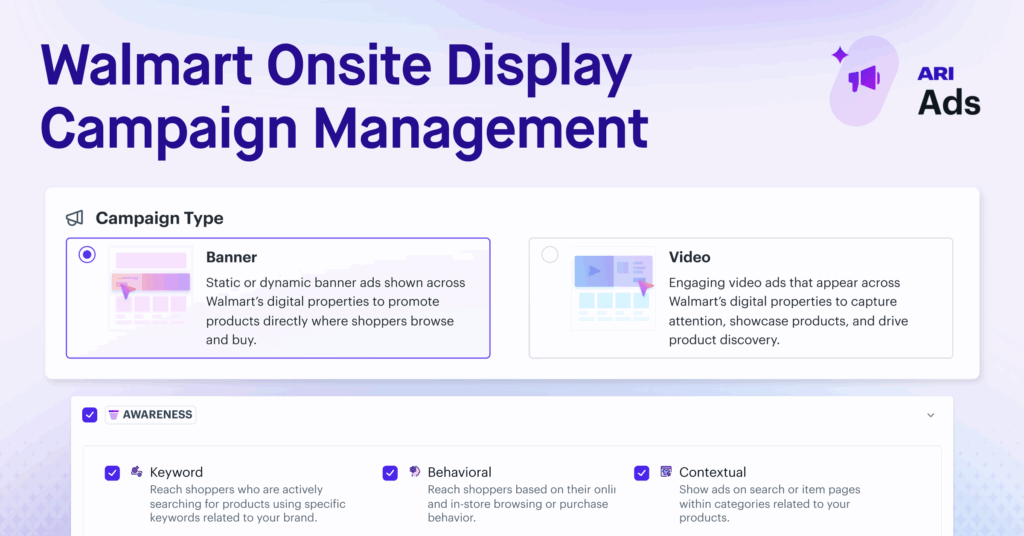
ARI is the industry’s first purpose-built generative AI retail operating system, unifying full-funnel advertising, catalog optimization, inventory forecasting, and performance intelligence into one continuously learning ecosystem.
Where existing tools manage tasks, ARI manages outcomes. Where traditional dashboards describe what happened, ARI predicts what should happen next. Where organizations once needed multiple teams and platforms, ARI becomes the single source of truth powering profitable scale. ARI is a (patent-pending) new foundation for how retail decisions will be made.
Why Now: Retail Has Reached Its Intelligence Limit
Marketplace retail has officially crossed a threshold where human teams and siloed tools can no longer keep pace with the speed, volume, and complexity of decisions required to win.
Brands today need a system that:
- Sees the full marketplace ecosystem at once
- Predicts impact across ads, inventory, catalog, and profitability
- Acts in real time—before opportunities disappear or margin leaks occur
- Scales faster than headcount ever could
That system didn’t exist. So, we built it.
Experience ARI: Request a demo.
What Retailers Will Need to Compete in 2026 and Beyond
To stay competitive in the years ahead, retailers will need systems capable of understanding, predicting, and orchestrating the full retail ecosystem in real time.
- Advertising Intelligence: Growth Driven by Profit, Not Activity -The brands that win won’t be the ones spending the most, but the ones whose AI can identify valuable pockets of demand, anticipate margin impact, and adjust investment before the market shifts. In a world of rising competition and shrinking visibility, predictive, profit-centric decisioning becomes a strategic advantage.
- Catalog Intelligence: Dynamic Listings That Evolve With the Market -In 2026 and beyond, static listings will be a competitive liability. Content must be capable of responding to marketplace algorithms, competitive movements, consumer intent, and real performance data—automatically. The brands that grow will be those whose listings act as living, learning assets, continuously adapting to capture visibility and conversion.
- Inventory Intelligence: Forecasting That Protects and Unlocks Growth -As marketplaces accelerate, inventory decisions can no longer be reactive.
Retailers require the ability to forecast risk, sense demand shifts early, and align advertising with availability, all in real time. This is how brands will avoid overspending, prevent stockouts, and ensure they never leave revenue on the table. - Unified Performance Intelligence: One View That Connects Every Decision– Say goodbye to the siloed insights I spoke of before. Leaders can’t be empowered to make high-conviction decisions if data is fragmented and lives in separate tools. The new frontier of retail competitiveness is a single, decision-ready intelligence layer that connects ads, catalog, inventory, profitability, and competitive trends. This is how organizations move from reporting to foresight—and from reacting to leading.
Artificial Retail Intelligence: The New Standard of Modern Commerce
Retail demands a level of insight that exceeds what human teams can manage on their own. But meeting this moment doesn’t mean adopting generic, off-the-shelf AI. The shift already underway requires far more than a basic AI assistant.
The complexities of modern commerce require systems that understand its nuances—the signals, the behaviors, the operational realities that define this industry. Retail needs AI built specifically for the language and logic of the industry it serves, designed to interpret its patterns and act with precision.